
Mastering Food Labels - How to Decode Nutrition Labels and Ingredient Lists
Learning how to read food labels is an essential skill for making informed choices about what you eat. This knowledge empowers you to navigate the supermarket, and the world of food marketing!
Let’s break down what to look for on both nutrition panels and ingredient lists. These food labels provide critical information about the nutritional value and composition of packaged foods. Understanding these details helps you:
Identify hidden sugars, unhealthy fats, and additives.
Select nutrient-dense foods that support your long-term health.
Compare similar products to make better choices.
Reading the Nutrition Panel
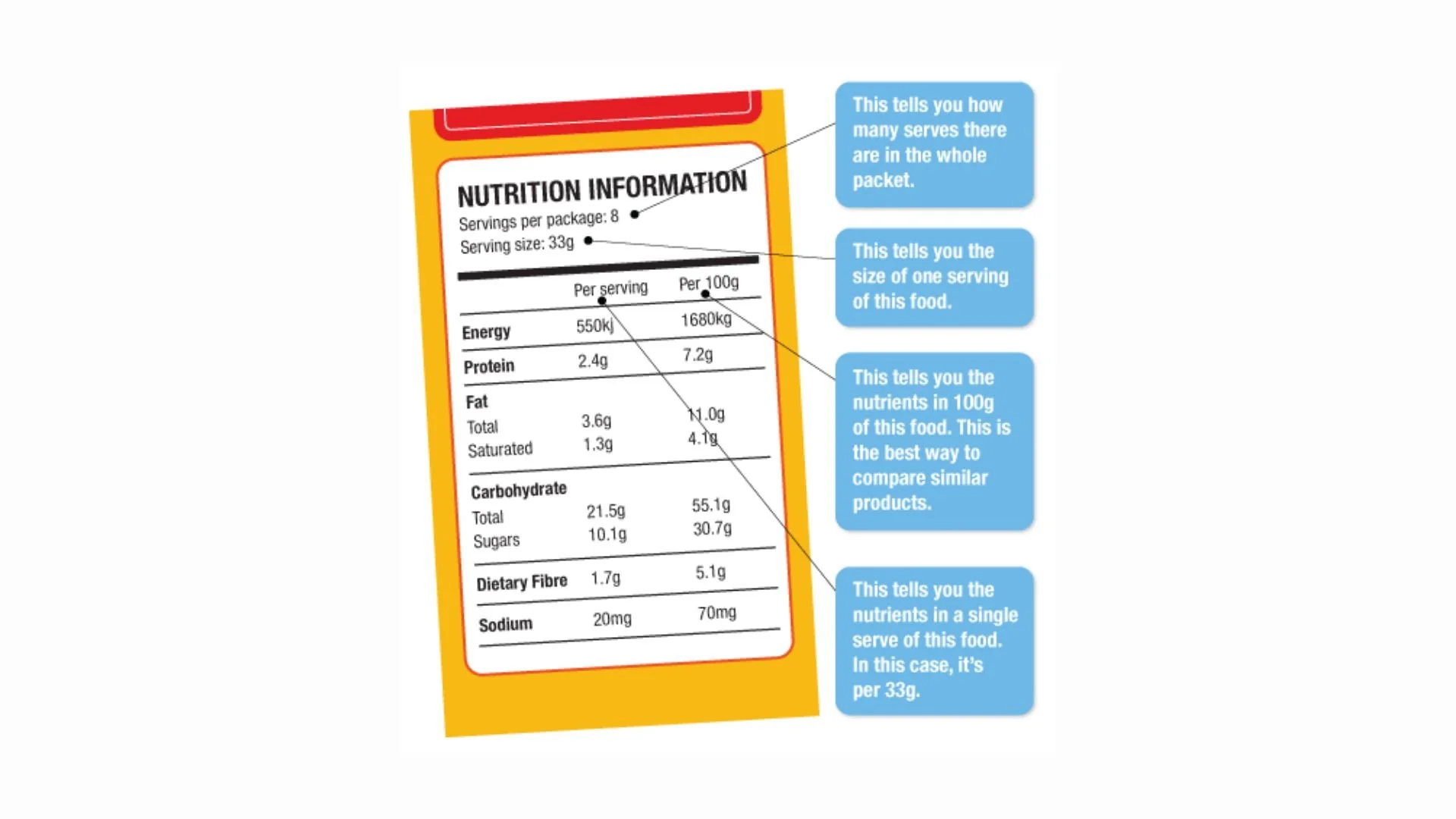
The nutrition panel shows the energy, macronutrients, and other key components per serving or per 100 grams. Here’s how to interpret the key sections:
Serving Size
Start here! Serving sizes can be misleading. A package might contain more than one serving, so always check this before interpreting the rest of the label.
If the serving size isn’t realistic for you, adjust the numbers to reflect your typical portion.
For example, some muesli bars are 2 servings - you would typically consume the entire bar in one sitting. So you would need to double the nutrient info.
Products will display the nutritional information per serving, and per 100g - checking a nutrient per 100g helps you easily compare multiple products.
Energy (Calories)
Calories provide a measure of the energy you consume. While not the only factor, they’re helpful for managing portion sizes.
Protein
Aim for products high in protein to help with satiety and muscle maintenance.
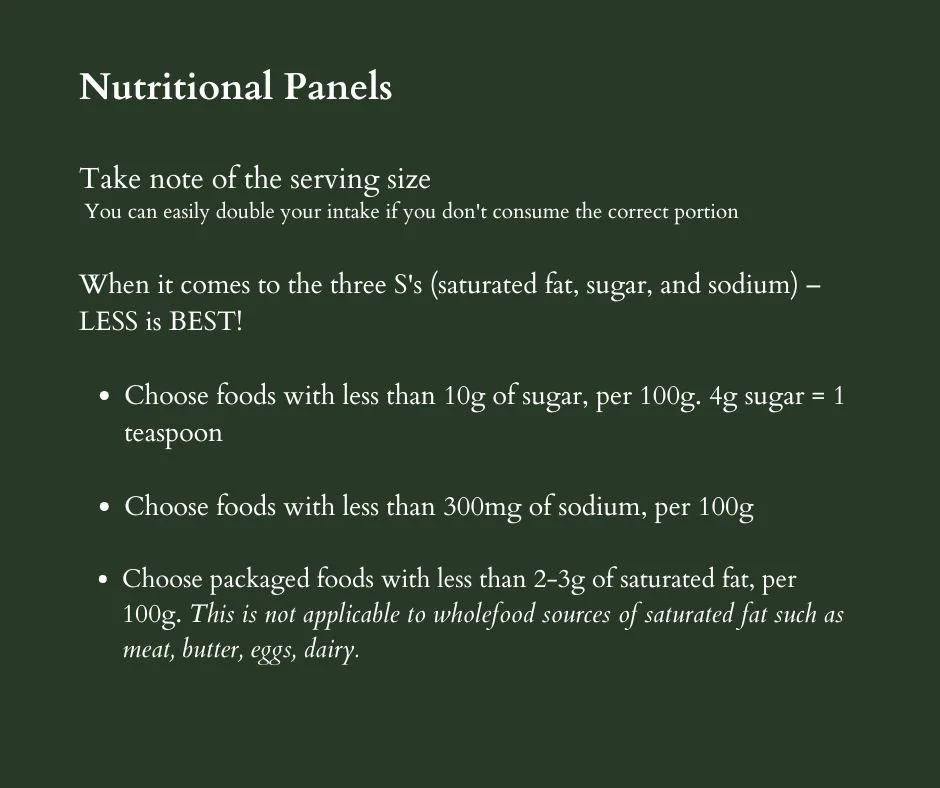
Look for 10+ grams per serve in snacks
Look for 30+ grams per serve in meals.
Fat
Differentiate between types of fat:
Saturated fat: Found in dairy, meat, and eggs.
Unsaturated fats: Found in nuts, seeds, and fish.
Limit/avoid trans fats & oils: Found in margarine, crackers, muesli bars, chips, bakery foods - biscuits, cakes, etc.
Carbohydrates and Sugars
Pay attention to total carbohydrates versus sugars:
Natural sugars in wholefoods like fruits and dairy are fine.
Look for added sugars in the ingredient list (e.g. glucose syrup, maltodextrin, golden syrup, cane sugar). Ideally, choose foods with less than 5 grams of sugar per 100 grams.
One teaspoon of sugar is equal to 4 grams. This is a helpful way to visualize sugar content when checking labels. For instance, if a small snack bar contains 2 or 3 teaspoons of sugar, that’s far too much for such a small portion. You would never add that much yourself.
Processed foods will always contain far more sugar than you would add yourself - imagine how much brown sugar or honey you would sprinkle on your bowl of porridge - Is it a teaspoon? You would not add 5+ teaspoons of sugar like many boxed cereals contain per serve.
It’s recommended to limit your intake of added sugars to no more than 6 teaspoons (24 grams) per day at most.
Sodium (Salt)
Many packaged foods are incredibly high in salt.
Aim for less than 300 mg per 100 grams
Most of our sodium intake today comes from processed foods, when eating wholefoods you naturally have a much lower intake - so don’t overthink the salt you add when seasoning. It’s very little in comparison. We need sodium.
Decoding Ingredient Lists
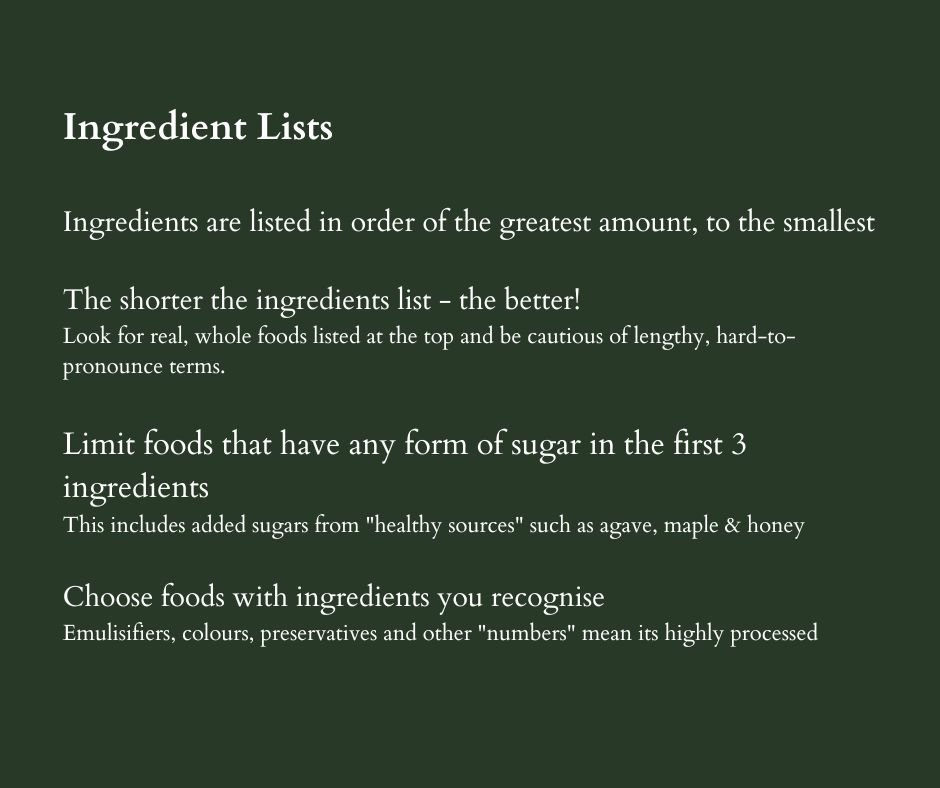
The ingredient list tells you what’s actually in the product. By law, ingredients are listed in descending order by weight (meaning the first few ingredients make up most of the food.)
The healthiest foods are those that don’t need an ingredient list at all - think fresh fruits, vegetables, eggs, legumes, wholegrains and plain cuts of meat. These items are naturally nutrient-dense and free from added sugars, salts, or preservatives.
FOCUS ON SIMPLICITY
Fewer, recognisable ingredients often means less processing.
Example: A bar containing “Oats, almonds, honey” is better than a long list with unfamiliar names.
Whole foods that don’t have an ingredients list should make up the majority of you diet: apple, egg, beef, chicken, etc.
Our Recommendation: Many fortified foods, like iron-enriched cereals or high-protein snack bars, often contain nutrients in forms that are not easily absorbed by the body. Fortification involves adding nutrients to foods that don’t naturally contain them. While this can boost the nutrient profile, it doesn't always deliver the same benefits as obtaining those nutrients from whole foods.
For example, with “iron fortified” and “high protein” options, the added synthetic iron or protein source is not as beneficial as it seem. Whole foods should be the foundation of your diet because they provide minimally processed, nutrient-dense options. They also contain synergistic nutrients - naturally occurring combinations of vitamins, minerals, and compounds that work together in ways we cannot replicate by simply adding isolated nutrients to processed foods.
For example, this could look like:
Eating fresh fruit instead of dried fruit snacks.
Enjoying a boiled egg instead of a protein bar.
Choosing whole grains, such as oats, instead of processed and fortified breakfast cereals.
By focusing on whole foods, you’re ensuring that your body gets the most absorbable and beneficial forms of nutrients in their natural balance.
Hidden Sugars: Know the Many Names for Sugar
Sugar isn’t always labeled plainly. It often hides behind terms that might not seem obvious at first glance. Common forms include:
Syrups: Corn syrup, high-fructose corn syrup, and glucose syrup are prevalent in processed foods.
Ingredients Ending in “-ose”: These include sucrose, fructose, glucose, and maltose.
Non-Calorie Sweeteners: Ingredients like sugar alcohols (e.g., sorbitol, erythritol), stevia, or aspartame may not add calories but can affect gut health, taste and cravings.
Our Recommendation: If sugar or its variations appear in the first three ingredients, it’s a sign the product is likely high in added sugars.
Artificial Additives: Colors, Flavors, and Preservatives
Processed foods often include artificial colors, flavors, and preservatives to improve appearance, taste, or shelf life. These additives can appear on the label as:
Artificial Colors: Often listed as numbers (e.g., Yellow 5, Red 40) or E numbers in some countries.
Artificial Flavors: Generic terms like “artificial flavor” instead of specifying the actual source.
Preservatives: Examples include sodium benzoate, potassium sorbate, sodium nitrate or E numbers like E211.
Why Limit Them? Frequent consumption of artificial additives can contribute to sensitivities, allergic reactions, or behavioral changes in some individuals, particularly children. Some preservatives, like sodium nitrate, are directly linked to cancers and chronic disease.
Our Recommendation: Choose products with natural alternatives, such as beetroot for coloring or spices for flavouring.
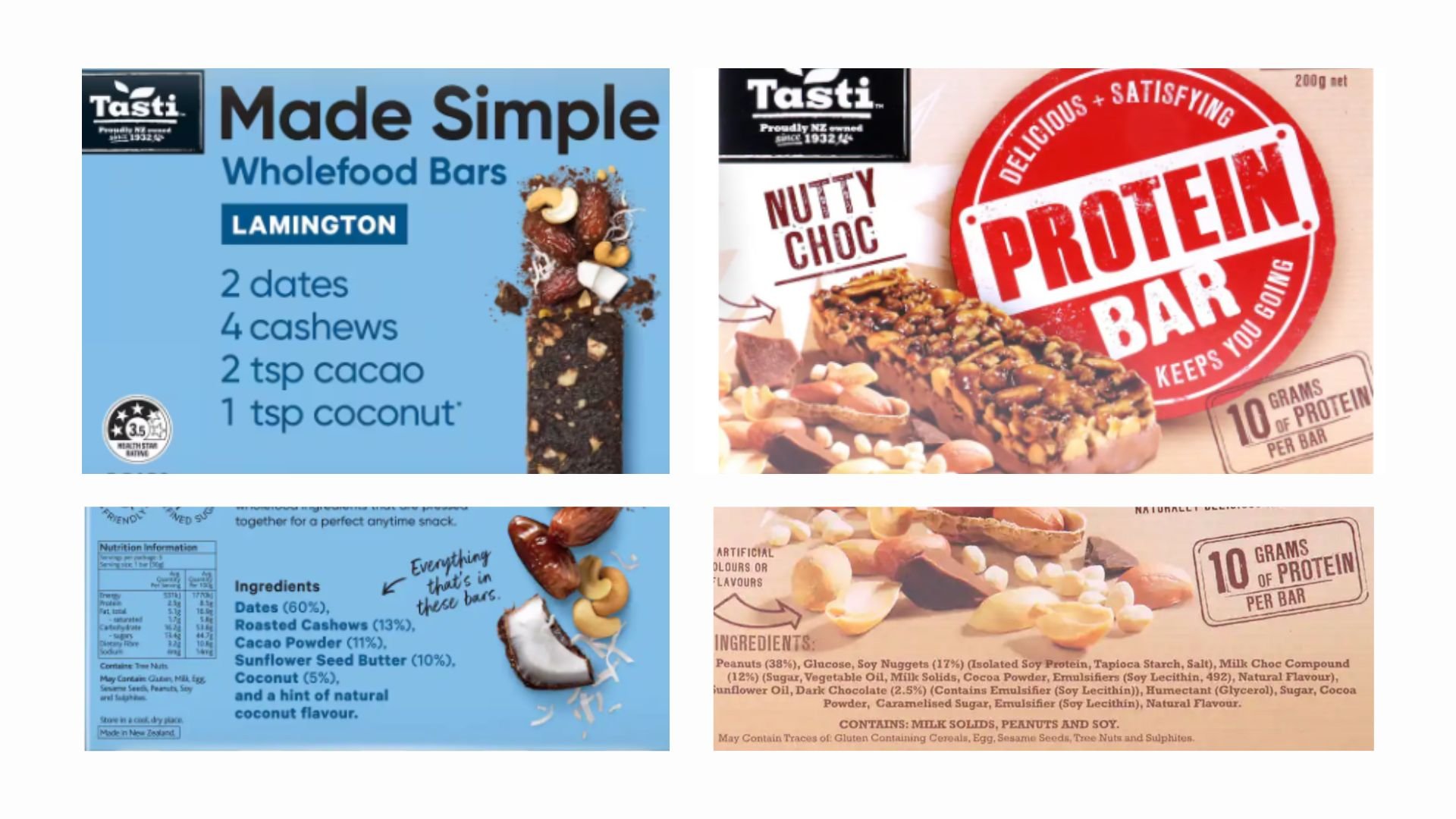
4 known ingredients vs 26 ingredients!
The bar on the right lists glucose (sugar) as the second ingredients, the “high protein” claim comes from incredibly processed soy nuggets, and it also contains emulsifiers, inflammatory oils and 3 more sources of added sugar.
In Summary
When choosing packaged foods:
Scan the first few ingredients - they tell you what the product mostly consists of.
Aim for simplicity: fewer, familiar ingredients are better.
Watch for hidden sugars and artificial additives, and prioritize natural, whole ingredients.
Remember: Most of your diet should come from whole foods like fruits, vegetables, lean proteins, and whole grains. These don’t need labels to prove their quality! If you’re overwhelmed at the supermarket, asking yourself if you are making wholefood real food choices will help you feel confident about nourishing your body well beyond the program.