
How to Support Testosterone
When we talk about hormones in men, testosterone is usually the first one that comes up. It’s often associated with muscle mass and libido, but its role goes far beyond that.
Testosterone influences energy, motivation, mood, confidence, focus, metabolism, and even sleep quality. It helps regulate how efficiently the body uses glucose, supports lean muscle mass, and plays a role in where fat is stored. In other words, it’s a whole-body hormone, not just a reproductive one.
When testosterone levels are well supported, men tend to feel energised, focused, strong, and mentally clear. Maintaining muscle and managing body composition feels easier, and there’s a greater sense of drive and motivation day to day.
On the flip side, low or suboptimal testosterone can show up as fatigue, brain fog, low motivation, difficulty building muscle, and challenges with weight management.
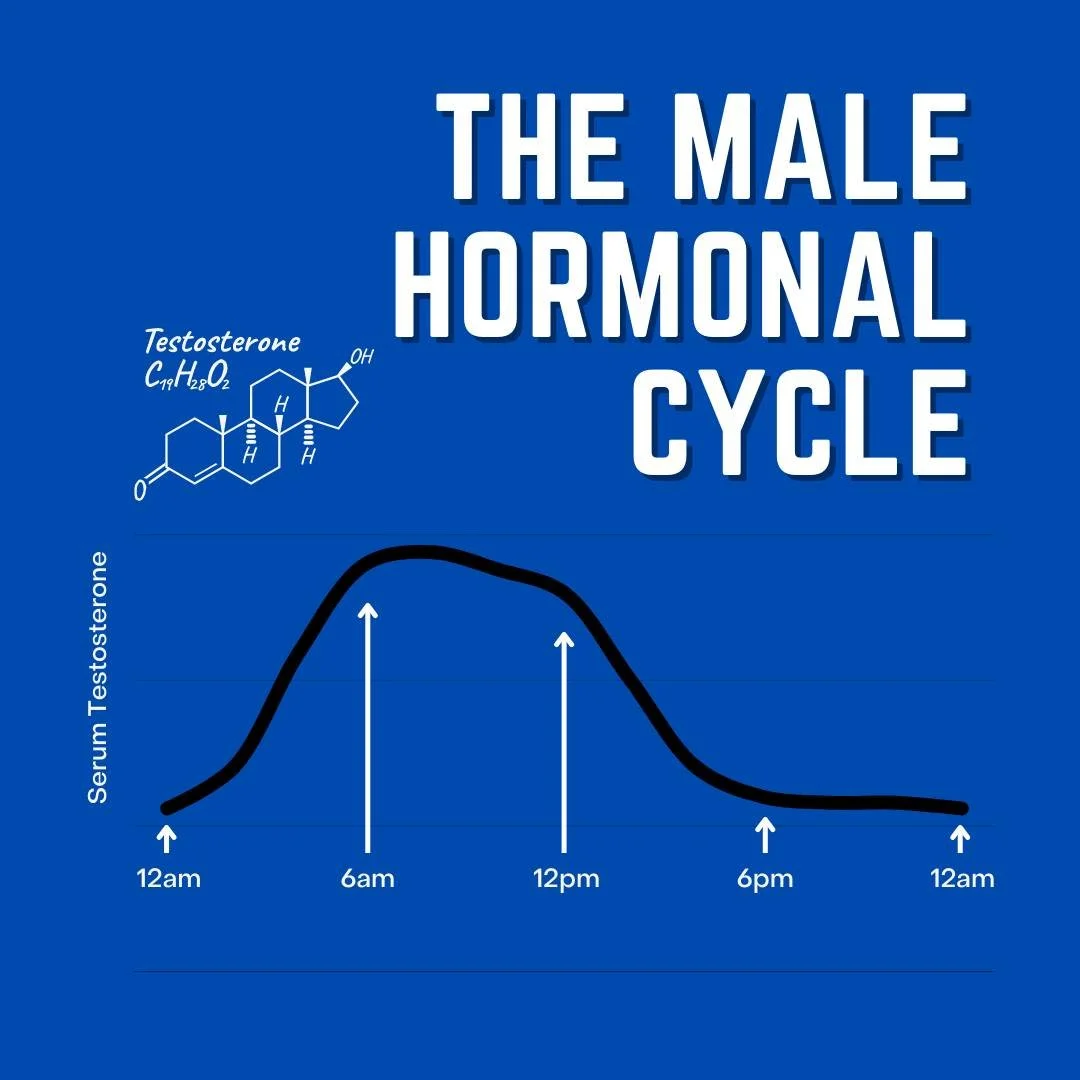
The Daily Rhythm of Testosterone
Unlike female hormones, which fluctuate across the month, male hormones follow a much simpler pattern.
Testosterone operates on a 24-hour cycle. Levels peak in the early morning - this is why many men wake up feeling more alert, focused, and ready to take on the day. As the day goes on, levels gradually decline. By the afternoon, energy and concentration may dip slightly, and by the evening, testosterone is at its lowest, helping the body wind down for sleep.
Sleep: The Foundation of Hormone Health
One of the most overlooked factors in testosterone production is sleep.
The majority of daily testosterone release happens during deep sleep, particularly during REM cycles. This means that sleep isn’t just about feeling rested - it’s directly tied to hormone production.
Even short-term sleep restriction can have a measurable impact. Studies show that just one week of sleeping around five hours per night can reduce testosterone levels by 10–15%.
Late nights, inconsistent sleep, or sacrificing sleep for early morning training can all work against hormone health. If there’s one area to prioritise, this is it.
Why Are Testosterone Levels Declining?
There’s growing evidence that testosterone levels in men have been gradually declining over the past few decades. When comparing men of the same age, today’s average levels are often lower than those of previous generations.
There isn’t one single cause. Instead, it appears to be a combination of modern lifestyle factors that collectively influence hormone production.
Chronic Stress
Ongoing stress keeps cortisol levels elevated. When the body is in a constant state of “survival mode,” it prioritises immediate needs over long-term functions like reproduction. Over time, this can suppress the signals that drive testosterone production.
Poor Sleep Habits
As mentioned, deep sleep is critical for testosterone production. Going to bed too late, not getting enough hours, or having disrupted sleep can significantly reduce output.
Sedentary Lifestyle
We’re moving less than ever. Long hours sitting, combined with low levels of physical activity, reduce the stimulus needed to maintain healthy testosterone levels. Resistance training and regular movement play a key role in signalling the body to produce more.
Nutrition Changes
Our food environment has shifted dramatically. Diets are now often higher in ultra-processed foods and lower in nutrient-dense whole foods.
Testosterone production relies on adequate protein, healthy fats, cholesterol, and key micronutrients like zinc and magnesium. When these are lacking, the body may struggle to produce hormones efficiently.
Body Composition and Hormone Balance
Lifestyle factors don’t just affect testosterone directly - they also influence body composition, which in turn impacts hormones.
Increased abdominal fat (visceral fat) contains an enzyme called aromatase, which converts testosterone into oestrogen. As body fat increases, this conversion becomes more significant, shifting the hormonal balance.
This doesn’t necessarily mean oestrogen levels are high - but the ratio between testosterone and oestrogen changes. This shift can contribute to symptoms like:
Reduced motivation
Lower libido
Decreased muscle mass
Increased abdominal fat
Slower recovery from exercise
Brain fog and fatigue
Testosterone also plays a role in behaviour, impacting drive, goal-directed actions, and decision-making - so changes can be felt both physically and mentally.
Supporting Healthy Testosterone Levels
The good news is that many of the key drivers of testosterone are within your control. Small, consistent changes can make a meaningful difference.
Prioritise Sleep
You can’t out-train or out-supplement poor sleep. Aim for consistent, adequate sleep and try to be in bed before 10pm where possible. The hours before midnight tend to be the most restorative.
Focus on Whole Foods
Shift away from heavily processed foods and towards whole, nutrient-dense options. A diet rich in protein, healthy fats, and key micronutrients provides the building blocks needed for hormone production.
Move Your Body
Regular exercise - especially resistance training - is one of the most effective ways to support testosterone. Movement signals the body to maintain and build muscle, which is closely tied to hormone health.
Manage Stress
Short-term stress is normal, but chronic, unmanaged stress will gradually suppress testosterone. Building in recovery, boundaries, and downtime is essential.
Consider Testing
If symptoms persist despite lifestyle changes, testing can provide clarity. A simple blood test can assess testosterone levels, and from there, targeted support (including nutrients or herbal support like zinc, maca, or tribulus) can be considered if appropriate.
Testosterone is not just about physical strength or performance, it influences how you feel, think, and function every day.
Modern lifestyle factors including poor sleep, high stress, processed diets, low activity, and environmental exposures are all working against optimal hormone health. But with the right foundations in place, testosterone can be well supported naturally.